
Women First Return to Westminster
Why Prostitution is Violence Against Women
On 17th March, I was invited to talk on behalf of FiLiA Women First at the All-Party Parliamentary Group on Commercial Sexual Exploitation (APPG), chaired by Tonia Antoniazzi MP, with secretariat support provided by the fabulous UK Feminista Team.
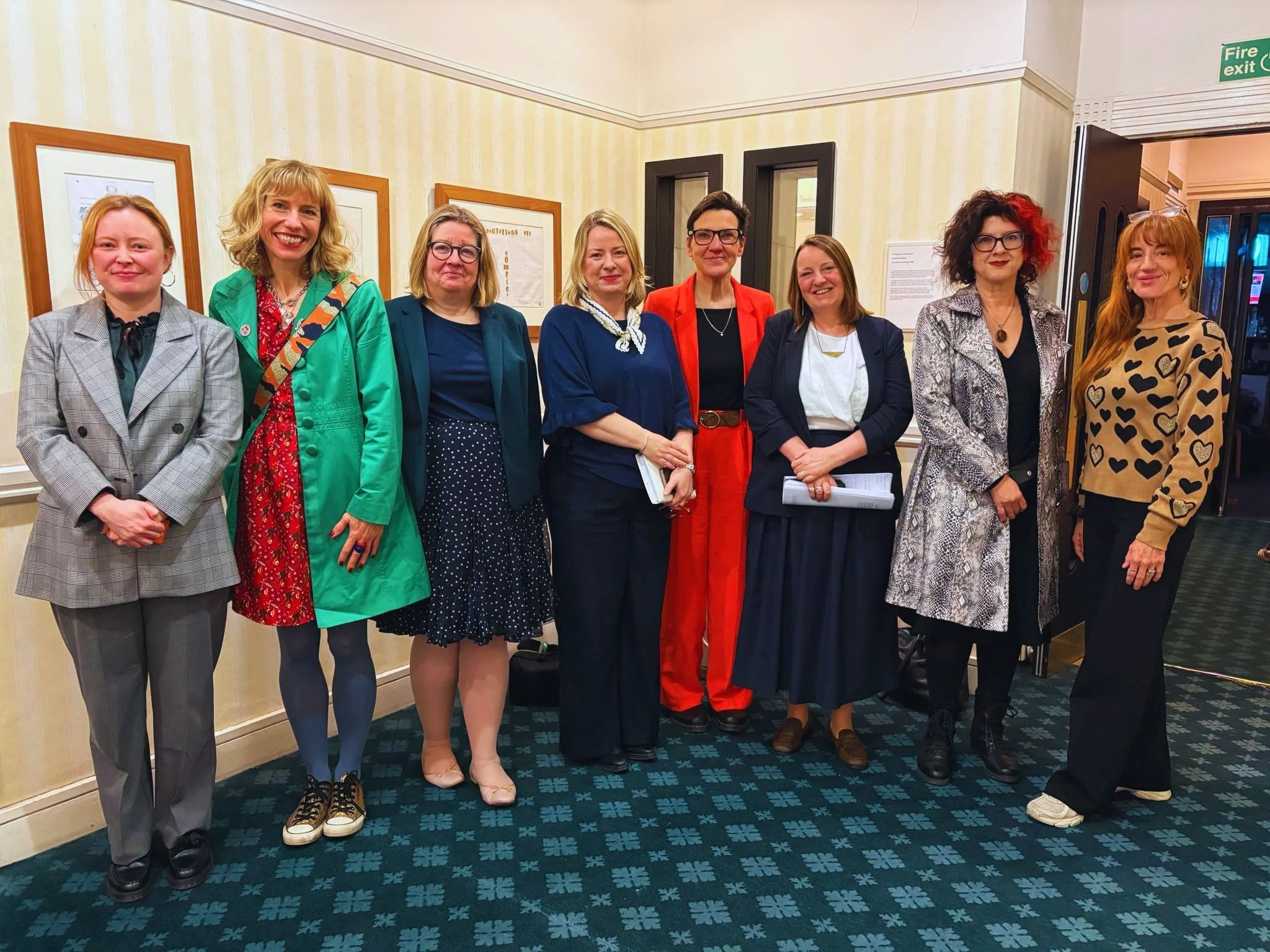
The event was titled ‘Why Prostitution is Violence against Women’, so it was apt that also invited to speak were Karen Ingala Smith, who spoke about victims of femicide who were involved in prostitution, and Kellie Ziemba, CEO of Kairos Women Working Together, a service that provides support to women involved in the sex trade.
Women First is part of the FiLiA Ending Male Violence Against Women and Girls (MVAWG) team. Note, we are MVAWG, not VAWG, because we are intentional in naming men as the perpetrators of violence against women and girls. This is something that is especially relevant when discussing the sex trade. All too often the conversations are limited to women, ignoring the men who create and sustain demand.
I presented to the panel some of the data from the recent Snapshot Report that the Women First team has coordinated on behalf of five grassroots organisations. The Snapshot reviewed data about 91 women who the five services had supported over the course of a week. It reveals what many of us working in frontline services already know – the overrepresentation of women (85% of them) who have had traumatic childhood experiences alongside high levels of serious mental health problems.
The Snapshot also highlighted their exposure to significant and sustained violence. Of the women, 77% reported serious violence against them – including gang-rape, abduction and attempted murder.
I shared with the APPG the findings of the Freedom of Information request that the Women First team carried out last year to understand the levels of services available to women in prostitution. The results from the 88% of the Local Authorities who responded show how much work there is still to do. Only 18% of councils confirmed they commission a dedicated service for women selling sex. Fewer than 10% of areas include services for women in prostitution within their VAWG strategies.
It is a well-documented statistic that 9 in 10 women want to leave prostitution, yet less than 30% of areas offer any help to support women to exit.
When we have asked women about ways out of prostitution, they have been consistent in their response, telling us how ‘women need to see that other women have exited’. As one woman told us,
‘I wanted to exit since first day of working…it was so horrendous…it was man after man after man, it was like being raped continuously’ or another, ‘If I carried on in that industry…I knew I would die’.
It is crucial therefore, that we name this as violence, and it seems increasingly more preposterous to try to frame it any other way.
I read to the APPG some ‘safety tips’ that I had found, written for women involved in the sex trade, such as to clearly state boundaries in your profile and the suggestion if your client becomes aggressive, violent or is attacking you in any way, try to get away from them.
I wonder how many of us would consider these to be appropriate responses to women exposed to other forms of male violence?
When it comes to women involved in the sex trade, the illusion of safety is as deceptive as the illusion of choice, and we do no favours by perpetuating it.
As one of the sex trade survivors that Women First spoke to told us:
‘There’s only gaslighting possible when it’s pro sex work. You can’t see the perpetrators.’
The Women First team will continue to speak clearly and loudly about the harms that the sex trade causes women.
We will continue to call for specialist support for women. We will continue to call for exit pathways, so that women can exit the sex trade.
We will continue to demand that the perpetrators of violence are held to account.
To find out more about our work, go to our Women First page.
Hannah Shead, Women First Project Lead