
FiLiA Trade Union Women's Network on Women’s Representation at the Alloa Women’s Festival
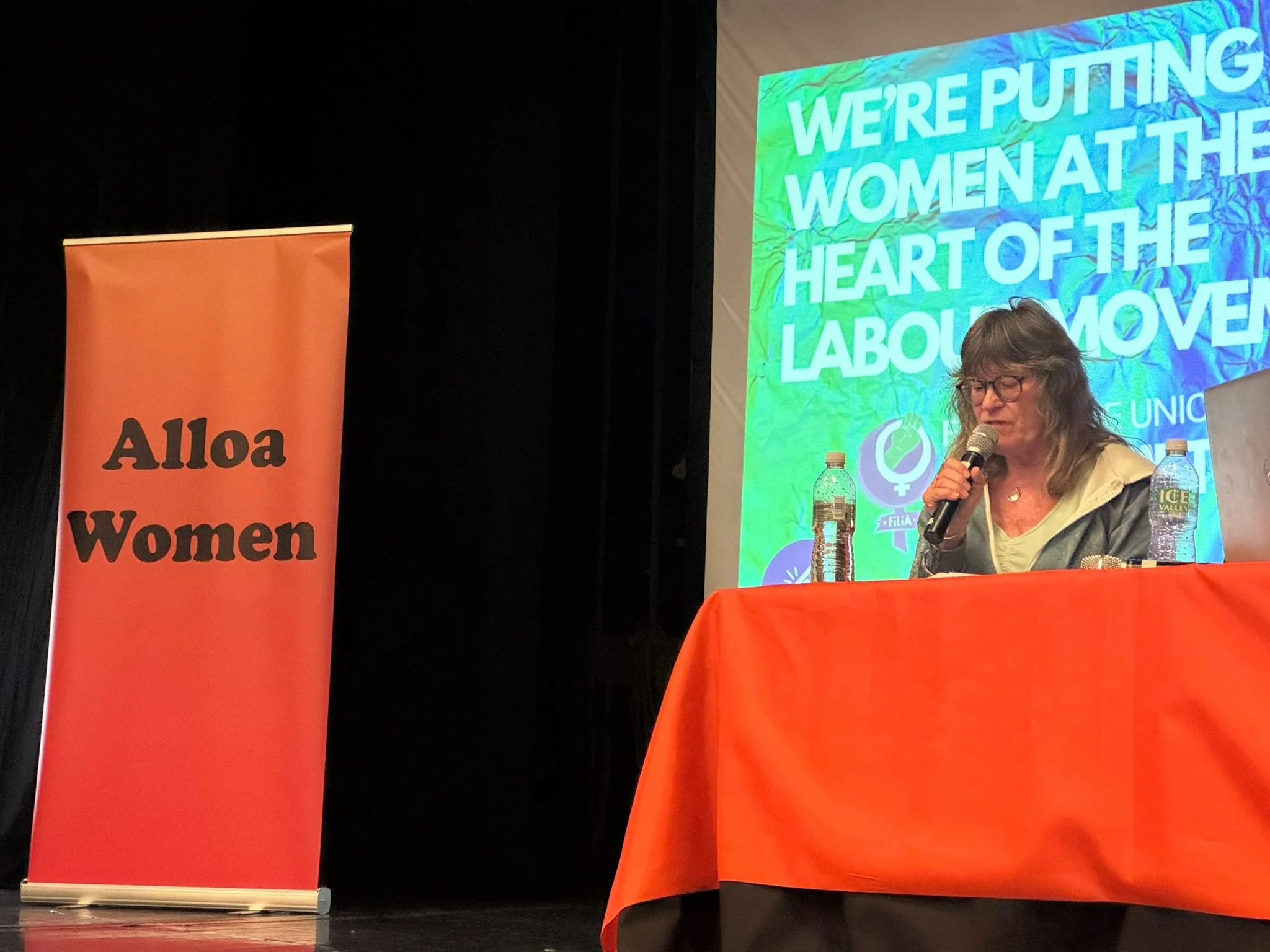
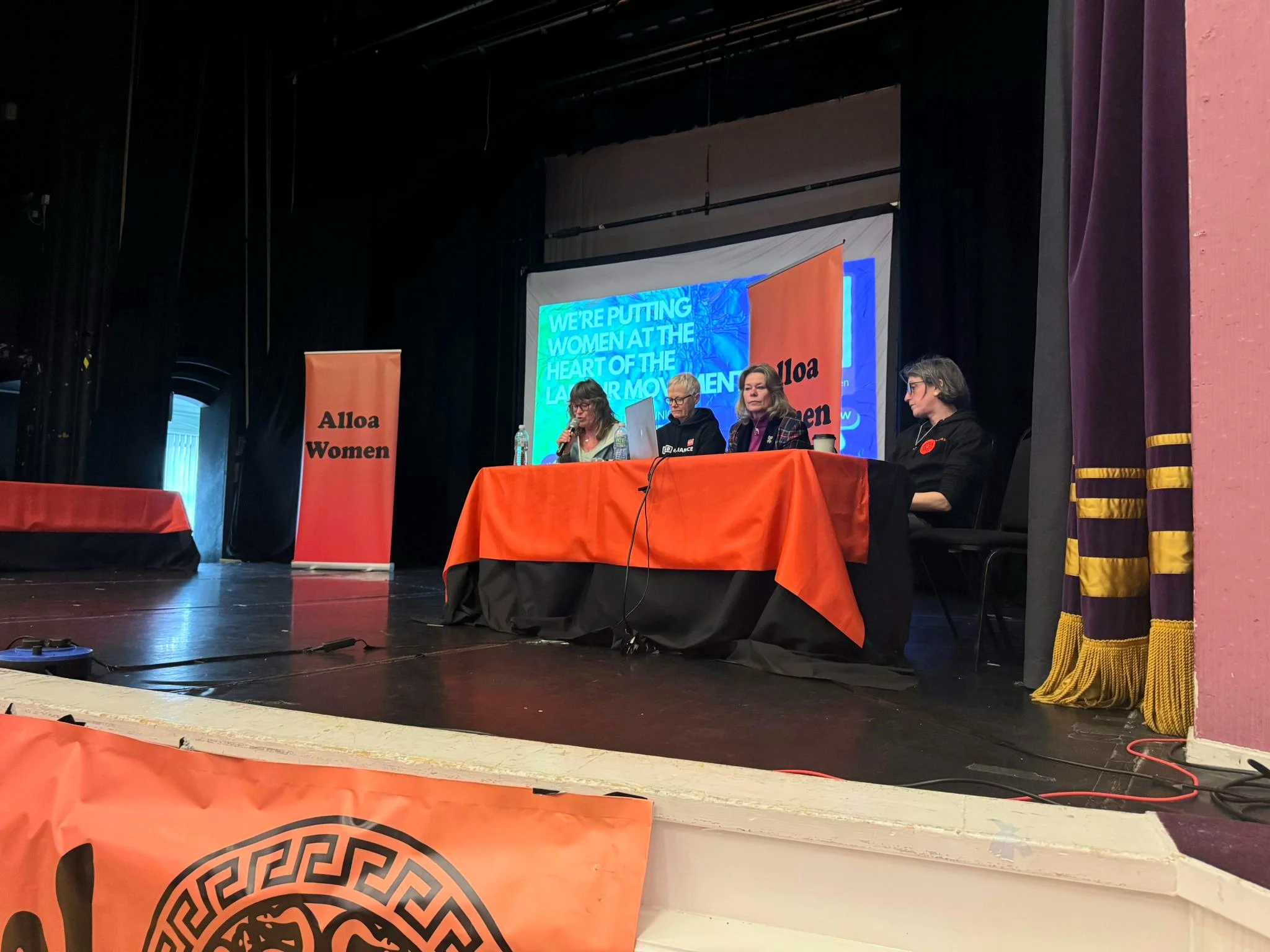
On 7th March 2026, Kate Ramsden, the Scottish Convenor of the FiLiA Trade Union Women's Network, was invited to the Alloa Women's Festival to speak on a panel on women’s representation, on behalf of the Network. This is a transcript of her speech.
Thank you so much for inviting me onto this Panel on women’s representation. I feel very privileged to be here speaking on behalf of the FiLiA Trade Union Women’s Network.
I’m sure most of you know about FiLiA, a Women-led Volunteer organisation and part of the Women’s Liberation Movement. Many of you will have been to their women-only conferences* and will have been inspired and empowered (like here) to be with so many sisters passionate about women’s rights.
FiLiA’s mission is to Build Sisterhood and Solidarity (locally, nationally, globally); Amplify the Voices of Women (particularly those less often heard or purposefully silenced) and to Defend Women’s Human Rights.
One way to do this of course is through the trade union movement. By rights, women should have a powerful voice in and through trade unions.
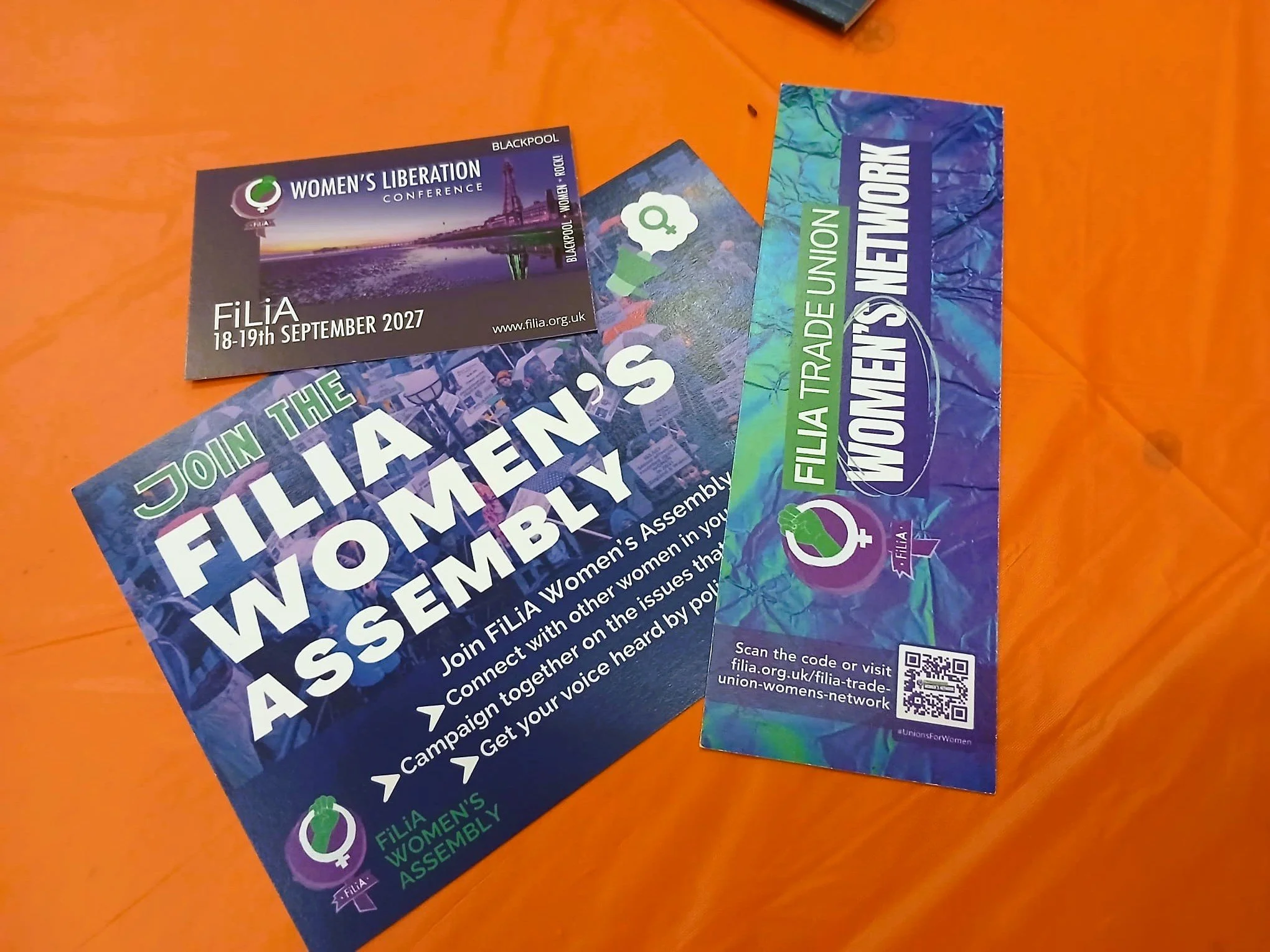
The FiLiA Trade Union Women’s Network aims to build solidarity across sectors to hold union leadership to account, and put women’s voices at the heart of the labour movement.
In this day and age, it is an important vehicle for women trade unionists who are trying to put a focus back on women’s legal rights under the Equality Act, including our right to single sex spaces and services. It offers a chance for us to come together as a powerful collective of women to make our voices heard.
After all, in Scotland women make up more than half of all trade unionists.
And our labour movement was built by and with women.
Women have always been at the forefront of the trade union movement – using their collective power in their unions to demand our rights and to fight for women’s justice and equality.
Trade union leaders and reps often recall with pride the struggles of women – the Lancashire millworkers, the chainmakers of Cradley Heath, the Ford machinists fighting for equal pay, the jute workers of Dundee.
In Scotland, Jane Rae, a shop steward from the Singers factory in Clydebank, lost her job in 1911 after organizing strike action.
Jane went on to serve as a local councillor and Justice of the Peace, and was well known for her firm rulings against men who perpetrated domestic abuse.
Working class women took on roles as councillors, on school boards, as Poor law guardians, long before they had the vote themselves.
We can recall Jessie Stephen, working as a domestic servant herself, campaigning tirelessly, over 100 years ago, as a young woman in Glasgow to establish a trade union for domestic servants.
The Women’s Labour League campaigned for state provision of nurseries and childcare, for family planning clinics and for decent housing.
These have all eventually become policies supported across the labour movement – if not yet fully delivered.
In the 1970s we saw the enactment of the Equal Pay Act and the Sex Discrimination Act (SDA), taken forward by a female Cabinet Minister Barbara Castle. The Equality Act 2010 (EA2010) brought this and other equality legislation together.
Before that sex-based apartheid was commonplace. Employers could lawfully refuse to hire women, could sack them if they got pregnant, could force them to resign if they got married, pay them less than men and cut their wages if they returned to work after having children.
Women and girls were banned from pubs, clubs and student unions.
But back then there was a clear understanding that women are a group whose labour power is devalued and that we suffer common disadvantages, injustices and male violence because of our biological sex.
There was a clear understanding that women are discriminated against in society on the grounds of our sex, and our experiences in the workplace are no different.
Workplace laws and policies were based on the clear understanding that there are two sexes, women and men.
The SDA was founded on that and is incorporated into the EA2010.
The Supreme Court ruling in April last year merely confirmed what was then universally accepted – an everyday understanding of sex, as something real, binary and unchangeable.
The Court clarified that this definition has been the law since the SDA was passed and was not changed in the EA2010.
Something I am sure everyone here knows and agrees with.
Back then the trade union and labour movement understood the importance of providing women space to stand together with trade union sisters.
They set up Women’s Conferences, Women’s Committees, women’s education and training sessions in recognition of the specific needs of women throughout their lives, fought for both through legislative change and in developing workplace policies through collective bargaining.
So, what has gone wrong within the trade union movement?
Well, unfortunately, in the intervening years it has adopted the belief that sex is an identity and consequently that the term ‘woman’ should be inclusive of men who ‘identify’ as women.
The equalities agenda, embraced by trade unions, has seen the creation of ‘self-organisation’ for other disadvantaged groups including Black workers, disabled workers and LGBT+ workers.
There is no doubt that these are groups that face discrimination, with Black workers facing structural oppression.
However, the focus on identity has had unintended consequences.
It has led to strong advocacy for trans rights which sit in direct opposition to women’s sex-based rights.
It has put trade unions (and much of the left) in direct opposition to the rights of women, at work and in society.
There is no need for this. The rights of transgender people to be free from discrimination are also set down in the EA2010.
But the whole ‘trans women are women’ approach won through in most unions. This has resulted in an assault on women’s sex-based rights and any attempt to defend them has been met by accusations of transphobia.
The Supreme Court ruling, which is a model of clarity, explains in detail why a definition of sex based on identity undermines women’s rights.
The Sandie Peggie v NHS Fife employment tribunal, although somewhat disappointing in its outcome and about to be appealed, and the Darlington nurses’ tribunal outcome, provide real life examples of the problems caused for women.
The trade union belief that sex is an identity was comprehensively lost in the Supreme Court case For Women Scotland vs The Scottish Government. The Court found that defining sex as identity cuts right across the human rights of women as a group, and specifically the rights of lesbian women and trans men, though unsurprisingly that part of the Ruling has been completely ignored.
Yet any suggestion that there is a conflict of interests between the rights of women and those of trans identifying men has been dismissed as a ‘divisive construct’.
Sadly, the months since the Supreme Court ruling have seen a concerted campaign of open defiance of the law and foot-dragging, by organisations opposed to it.
Despite the majority of its members being women, the trade union movement, at least publicly, remains entrenched in its opposition to women’s Equality Act rights.
This year’s STUC and TUC Congresses resolved to oppose the ruling that sex means biological sex and to campaign against it. So did the STUC Women’s Conference in October, with Roz Foyer, the STUC’s General Secretary describing the ruling as ‘deeply troubling’.
What is deeply troubling to me is the failure of the trade union movement to return its focus to women’s rights and women’s needs, psychologically as well as practically for spaces and services open only to biological women.
There is a lot at stake here for the trade union movement. Not just their credibility but also potential legal risks.
Now women are being forced as a very last resort to take legal action against their own trade unions, to get them to comply with the law on women’s rights.
Sandie Peggie intends legal action against her union, the RCN, for failing her. Cases are also being taken against PCS for breaches of the EA2010 by women members who have already exhausted internal processes and been frustrated.
This is not how it should be. The trade union movement gets its strength from collective action. Fighting for women’s sex-based rights should not be on individual women and crowdfunders.
Everyone who is a union member should have equal access to representation and voice, full rights as a TU member. We should expect our trade unions to speak up for a safe and respectful working environment for women.
There is also the danger that this opens the door for the Right to pose as defenders of women’s rights and gives it ammunition with which to attack trade unions.
These are the dangers created when class organisations including parties claiming to represent working class interests abandon material reality for identity ideology.
But none of this takes away from the fact that trade unions are still relevant to women. They are still an important vehicle to win rights for women workers.
Employment legislation, most recently the Employment Rights Act passed by this Labour Government, is a product of work done by trade unions.
Provisions include improved workplace rights for maternity, paternity and family leave, requirements around menopause workplace policies – and increased rights for trade unions to access workplaces and to recruit.
These are policies which benefit women in the workplace.
Health and Safety (H&S) too is so important for women at work. Trade unions still champion that and do their best to hold employers to account. Unions have won legal provision for H&S reps in workplaces, with time to do the reps job, and with training available.
However, we need more women H&S reps who understand the implications for women’s health and safety of workplace policies and how they are implemented.
You can find out more at the FiLiA Trade Union Women’s Network webinar on Thursday 26th March.
That is why women’s organisations like the FiLiA Trade Union Women’s Network are so important.
As it says, ‘the trade union movement needs women and women need trade unions’.
We know that trade unions have let women down. They have shifted away from class politics that recognised the oppression of women as part of class oppression, to instead be driven by an equalities agenda that has allowed identity politics to trump women’s rights.
But we won rights before by standing together and we can do so again. FiLiA is part of a growing feminist force fighting to regain power in our workplaces and unions, to build solidarity across sectors, to hold leadership to account and to put women’s voices back at the heart of the labour movement.
Despite, but also because of these challenges, I would urge everyone here to join a union.
And I urge all those of you who are trade unionists to be active in your own unions and to find like-minded women to stand alongside. Union branch meetings offer a chance to change the narrative. And there is support in our networks to learn about the structures and procedures and how we can use them for women’s empowerment.
After all, we have seen the power we have when we stand together as a collective and we know that many trade union women agree with us but are afraid to speak out.
If or once you are in a union, please sign up to the FiLiA Trade Union Women’s Network and if you agree, and you work in Scotland, you will be directed to our Scottish Network. There you will also find support and advice.
I just want to finish by letting you know about a forthcoming women-only webinar, organised by the Morning Star Women’s Readers and Supporters Group on 17th March 7-8.15 p.m.; Prof Mary Davis will talk on How Identity Politics Fail Women. Please join us if you can.
Thank you for your time today.
Kate Ramsden is convener of the FiLiA Trade Union Women’s Network in Scotland. She has been an active trade unionist and left feminist most of her working life. She was on the national leadership body of her trade union until her retirement in 2023 and continues to participate as a retired member. In her various current roles, Kate remains actively involved in campaigning for the rights of women, children and other marginalised groups, both in Scotland and internationally.
A social worker for over 40 years, Kate has actively promoted the profession and still campaigns for social work practitioners to have a working environment that empowers relationship-based practice and a human rights focus. Kate reads, supports and writes for the Morning Star and was instrumental in setting up the Morning Star Women’s Readers and Supporters Group.
*NB: FiLiA conferences are not women-only, but we do provide women-only sessions.