
Women in FiLiA – Reflections on the Past Week
KRUTI WALSH, FiLiA Trustee
The Together Alliance Coalition, the organisers of the Together march last Saturday in London and chaired by Kevin Courtney, did a great job at keeping the aim of the march clear and simple and staying on message: the march was to be a show of unity against the far right and against racism – that's it. And that's why we went.
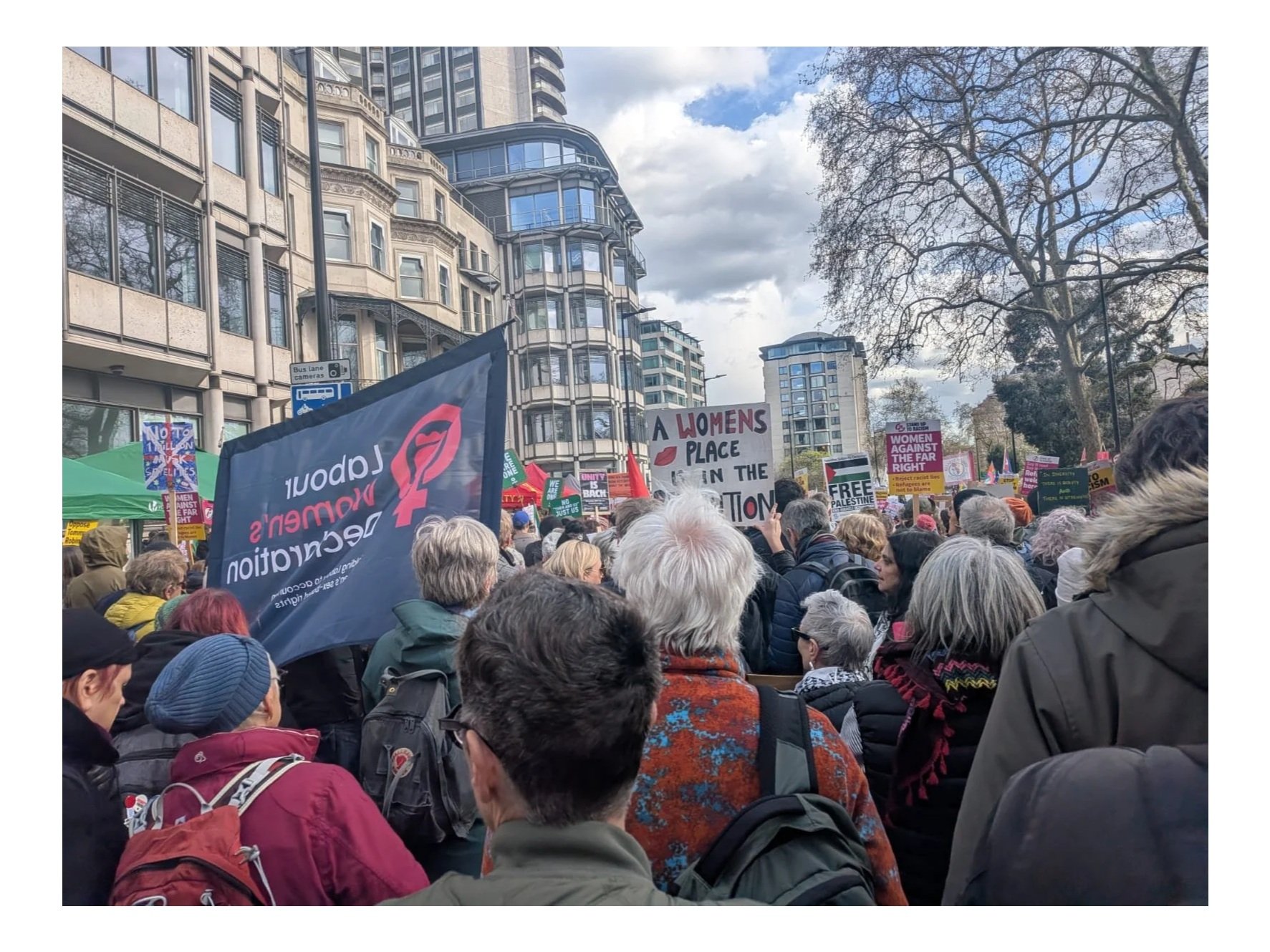
The rise of the far right is a huge threat to the people of the UK, Europe and the wider world. We know from history and current global politics the devastating consequences of authoritarian, nationalistic governments who want to limit human rights for some. We are all experiencing for ourselves the increasing polarisation, division, misinformation settling in our lives. We see binary thinking everywhere now: it must be one way or the other, there are only two groups – us and them; whole groups of people are othered and we are encouraged to hate instead of find solutions.
In the UK, migrants are being scapegoated and ‘mass immigration’ is being blamed for the ills in society – the cost of living, the inefficiencies of the NHS, threats to ‘English culture’, to name a few. Racism and racist incidents are on the rise again. Project Resist and the Angelou Centre's report after the far-right riots in 2024 and following the shocking murder of three young girls in Southport laid out starkly the scale and breadth of racism to women and children, particularly those who look Muslim, and the impact on their safety, security and health.
We needed a show of solidarity with Black, minoritised and migrant women and the Together Alliance gave us that opportunity.
I am proud to have marched in the biggest anti-racist march in UK history with FiLiA, particularly alongside our sisters: Labour Women’s Declaration, Women’s Liberation Alliance, Project Resist, Feminist Dissent and others. It is important that sex-realist feminists are in anti-racist spaces – these are our spaces too. And we need to be in them to show our politics as an option for those on the left and to dissolve the binary thinking that suggests you can’t be on the left if you are sex-realist (or conversely that gender critical people must be right wing).
The march was peaceful – there were no arrests, violence or loutish behaviour. This is despite there being very different groups, with very different politics in the same space, including those holding diametrically opposed positions on some topics, such as on sex and gender, and religion and secularism. There were people and organisations representing different interests and views on governments and peoples around the world. Being on the march showed that we can come together around one bigger-than-all-of-us aim, united against racism and the far right.
Not only was it peaceful, it was fun! There was music and dancing, and a great atmosphere all along the march and ending with a rave in Trafalgar Square. I am glad we were there, to be part of something bigger, a historic moment for our country.
Being on the march was a signal. Do we want far right policies in this country, to be nationalistic, to have closed borders? Or do we want to be liberal, open, multicultural? At least 500,000 said they want the latter (compared to 110,000 on the Unite the Kingdom march). There are more with us than against us and the political machine now needs to listen. People don't want draconian anti-immigration measures, we don't want conflict and division. We want fairness and unity.
FRANCESCA PLATT [FiLiA Women’s Assembly]
I was proud to walk with my FiLiA sisters and the beautiful banner on Saturday. I went down on a community organised coach from my northern town. The coach was made up of predominantly women and kids, with some men, from various different communities, ethnicities and groups.
The main organisers of the coach were women, including Muslim women, who wanted to be there because they wanted their voices to be heard, as they should be, when they are living at the front line of the abuse, victimisation and harassment that is being whipped up by those like Tommy Robinson, Nigel Farage and Rupert Lowe. I walked with FiLiA because they know that the spaces of the left belong to us too and that while I may not agree with some groups there, the demonisation, abuse and hatred being stirred up presently affects millions of women and an organisation that centres women should reflect that.
LILY, AGE 22 [FiLiA Young Women’s Working Group]
It can feel really disempowering to see the global and local rise of fascism and feel helpless in the face of it. Marching in such a huge antifascist crowd gave me hope, and doing so with a group of feminists who I admire made it all the more brilliant. Sometimes we would drop to the side and move further up or back along the crowd and see different parts of the demo. It was amazing to see so many groups – those I’d heard of and those that were new to me, those I love and those I disagree with on nearly everything except this important cause! I’m really glad FiLiA was there to be a part of this moment in history, and I’m glad I was there too!
KIRI TUNKS [FiLiA Trade Union Women’s Network]
I was proud to be on the Together march with FiLiA at the weekend, a vital act of solidarity and strength at a time of rising racism and Far-Right activism. I was in central London last year when Tommy Robinson and his supporters swarmed onto the streets in huge numbers. The tension on the streets was palpable and it was a frightening place to be. I was also a teacher in Tower Hamlets for over 30 years and it reminded me of all the times our students were too frightened to walk home after school because the EDL were threatening to march through the area or because of the many incidents of racist abuse.
Tower Hamlets is an area rich in immigration, but it is also a routine target for racists and the Far-Right. The community there has a proud history of uniting to challenge racism and fascism. Like in 2010 with the creation of United East End, a coalition of civil, faith and community groups to stop EDL from marching in Tower Hamlets and to ensure everyone felt supported and safe. That coalition still exists today.
Ninety years ago this year, at the Battle of Cable Street, people from different communities united to block Oswald Mosely and his Blackshirts who came to target Russian and Polish Jewish migrants. It was in this tradition that thousands of people assembled in Walthamstow in 2024 to stop racists attacking an immigration centre. Despite differences in origins and beliefs, people understand that the Far-Right is a threat to the rights of everyone as well as the vital importance and power of a community united in its own defence. As long as that is the driving force of the Together Alliance I will be part of its mobilisation.
FiLiA Volunteer
A political candidate recently suggested that those who don't have children should be taxed more. It is women who bear the brunt of far-right policies like this. Women are always the most harmed by such extreme policies: we either have too many children or not enough.
I know that numerous people at the march have ‘queered’ the term ‘far right’. I don't see why I should allow them to define terms for me. I know that the Overton window shifts, but I also know what far right objectively means. I know that it doesn't mean saying that men aren't women nor that anyone who disagrees with me is far right.
I also know that some people there had views I strongly disagree with. But for the most part, I felt the connection there with the majority, on one issue I think we should all embrace. Othering people and blaming other cultures will not fix years of severe underfunding. Far right policies divide us and disproportionately punish those who are not to blame.
LISA-MARIE, CEO and Co-founder
If I had to live this week all over again, I wouldn’t change a thing.
FiLiA took Feminism into the heart of two massive events and stood our ground.
Naidex
Ann Torode was a socialist, feminist and disability campaigner who passed away in 2017, leaving some funds for FiLiA to reach out to disabled women, hence our booking a stall at Naidex, billed as ‘the most established platform for the disability community’ with an estimated 12,000 attendees. Building on the work of the FiLiA Campaigns and Policy team around the Pathways to Work: Reforming Benefits and Support to Get Britain Working consultation we set up our rather conspicuous, suffragette-styled stall.
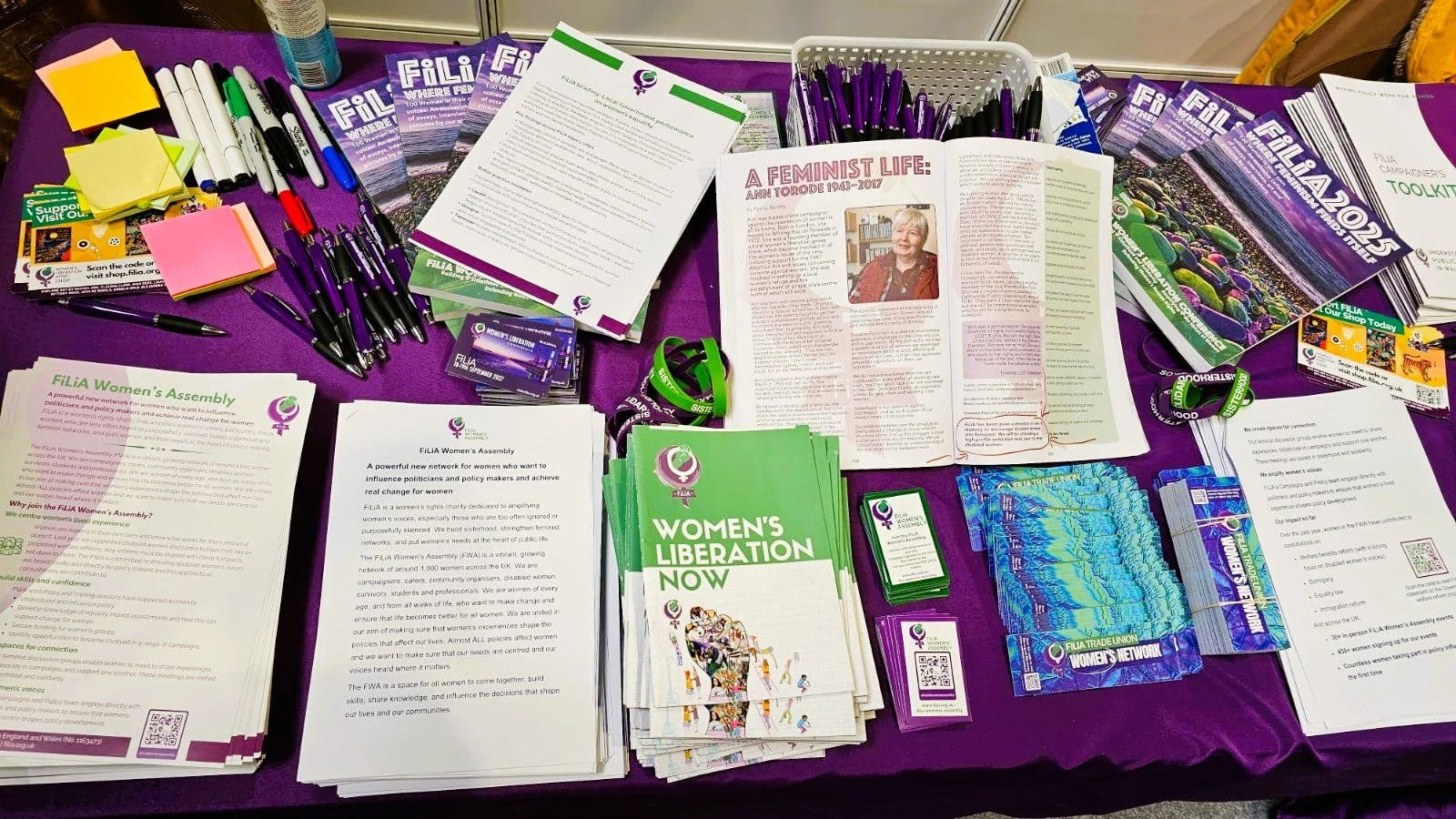
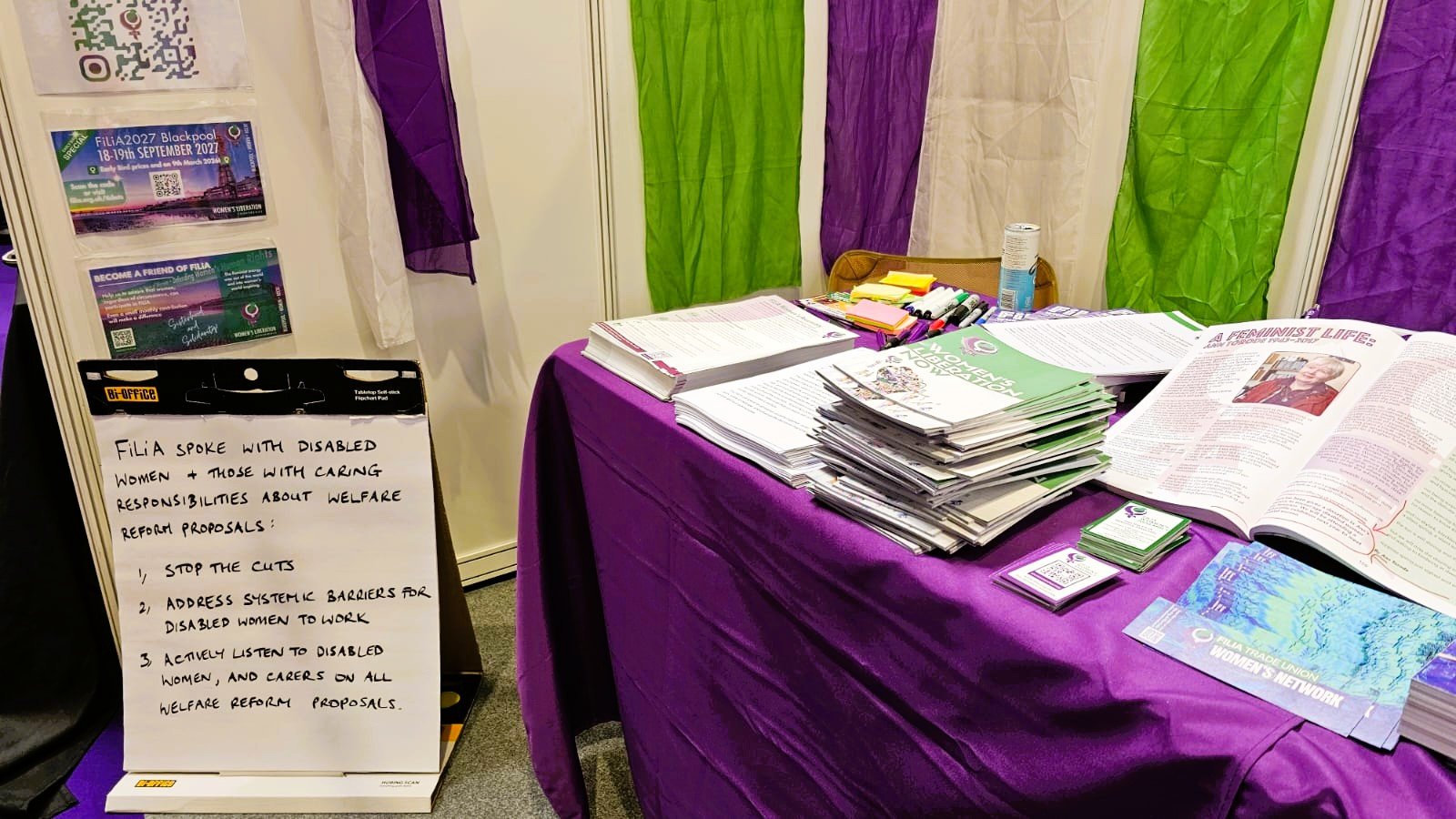
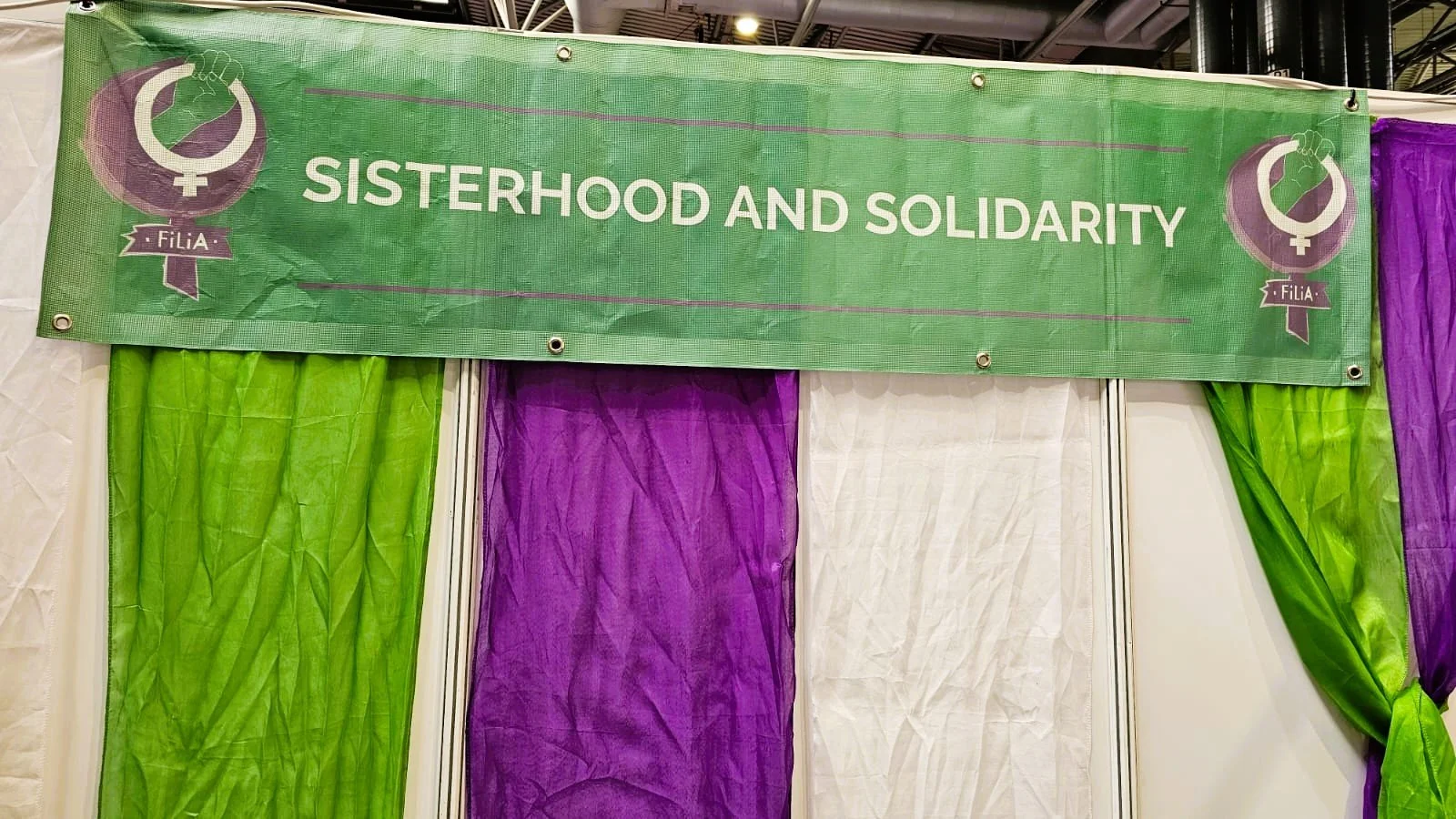
The organisers had received ‘expressions of concern’ regarding our presence and published a reaffirmation of their inclusive values, emphasising to us the importance of ‘an environment that is safe and welcoming for every visitor, exhibitor, and speaker’. We responded by stating that women have been subjected to threats, broken windows, hate-filled communications, cancellations and more, expressing the hope that the event would be a safe and welcoming place for us and inclusive of diversity of thought and mindful of the everyday threats that women face.
The engagement was phenomenal – we didn’t stop for the two days. Themes drawn from our conversations included poverty, violence, healthcare, stereotypes and isolation:
‘I get touched and patted and pushed without my consent.’
‘I am barely able to feed my kids.’
‘I had to come on my own today because money doesn’t cover a carer.’
‘I’m too tired to be angry.’
Quotes from disabled women and carers at Naidex
Overwhelmingly, the principal issue was that of not being listened to or heard, with women taking the opportunity to speak with us at length. There were many disclosures of male violence – I was acutely aware that disabled women are more frequently subjected to domestic abuse but hadn’t thought enough about women becoming disabled because of abuse. We met three such women over the course of the event.
Whilst paying close attention to women’s (often harrowing) experiences, interlopers would pass by and rudely butt in with loud accusations of ‘transphobia’. We did our best to bring the focus straight back to the women in front of us, however, it was frustrating to witness women who had highlighted the desire to be heard being interrupted and talked over in the name of ‘inclusion’.
Disability groups do critically important work – it’s clear that disabled women (mothers particularly had a lot to say about needing increased support) would benefit from more of a focus (and, yes, that included single sex provisions). There’s work to be done – FiLiA is pleased to be working in this space – and hopefully those who signed up to engage with us further (around 100) will be a major part of taking things forward.
With thanks to Ann for making everything possible.
The Together March
If you looked closely, amid half a million people, you could spot the FiLiA contingent at the Together March. Our politics (small p) haven’t changed – but the context in which we operate has.
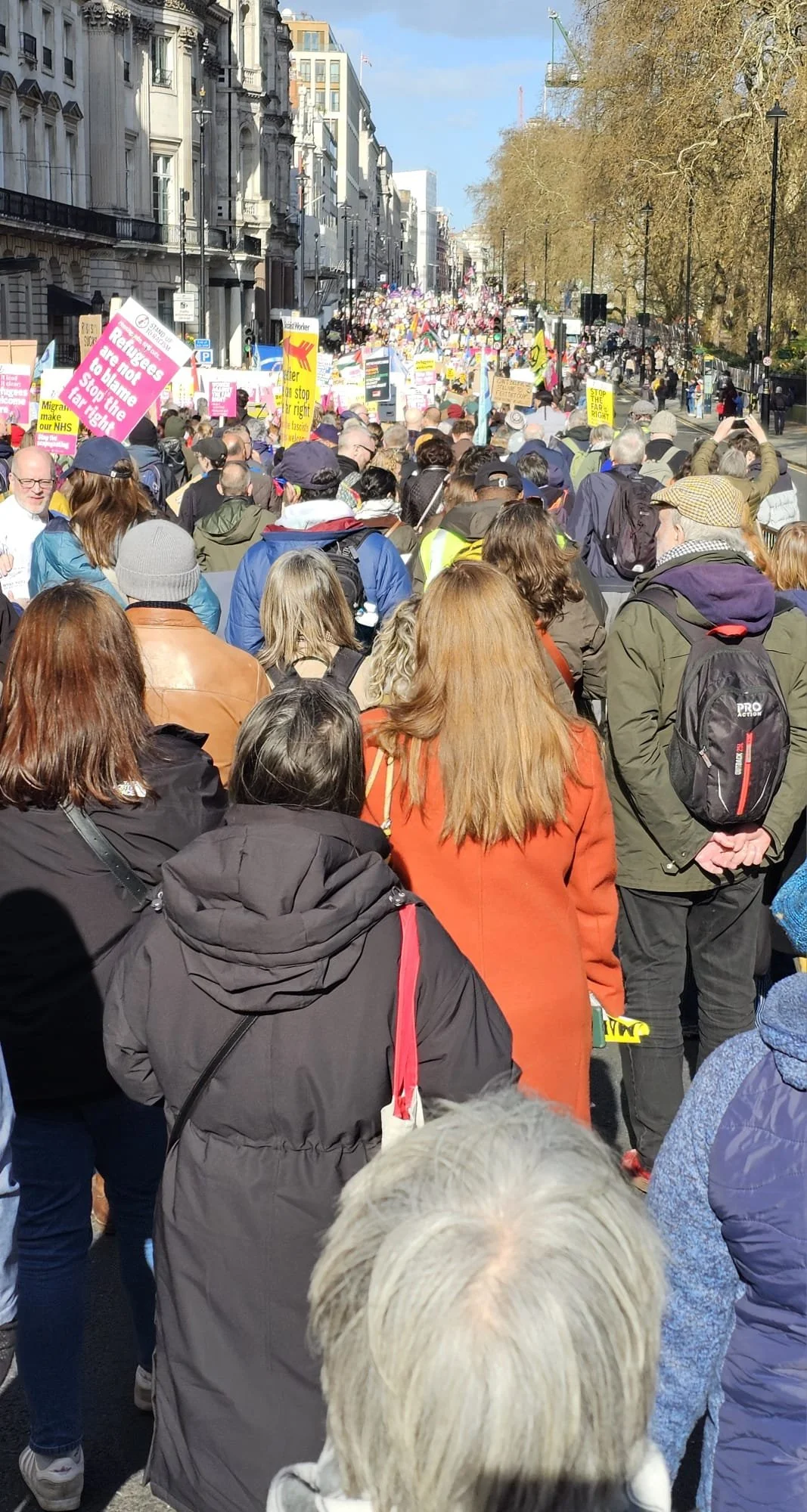
The rise of the far right across the globe brings with it vast challenges for women and girls that are obvious to all in the feminism movement. The explicit and beautifully simple message of the Together March was as follows:
Together we can reject narratives of division and racism
Together we can build solidarity across communities
Together we can unite against the far right.
No, we don't align with all on the march – when it comes to the rights of women and girls we are diametrically opposed to some. Certainly, there were a number who felt that we shouldn't be allowed to take part, and a few made that known to us during the event.
We had a choice – turn up or stay home. I am sick of women being told to stay home. We support sex-based rights. We are anti-racist. We are steadfast in our feminism, and we will not concede the space.
As feminists, we recognise that right now is a critical moment in time to organise and mobilise against racism, fascism and the far right, and we thank the organisers for what Diane Abbott called ‘the largest anti-racist march that I have seen in my lifetime’.
FiLiA’s aims:
Build Sisterhood and Solidarity (locally, nationally and globally)
Amplify the Voices of Women, (particularly those less often heard or purposefully silenced)
Defend Women’s Human Rights.
Find out more about us, join us, support us.
Sisterhood and Solidarity!